
Every great adventure starts with a dream. For me, the idea of operating a ham radio station from the US Virgin Islands was a plan more than a decade in the making. The allure of combining travel, contesting, and the challenge of setting up a station in a new environment was irresistible. The ARRL November Sweepstakes, a favorite contest of mine, became the perfect anchor for this journey.
November Sweepstakes
I’ve participated in the Sweepstakes for a couple of decades now from Kansas. The Sweepstakes is a fast-paced contest where you try to contact other US and Canadian stations, and exchange ARRL section (like in Field Day). The Kansas section isn’t particularly exciting or rare, so we’re often passed up for more exciting prey. I began to analyze what sections appeared to be the most common on the air, which I’ve plotted over the top of a state/province map of the US and Canada. Granted these are my own Kansas-results, so your mileage may vary.
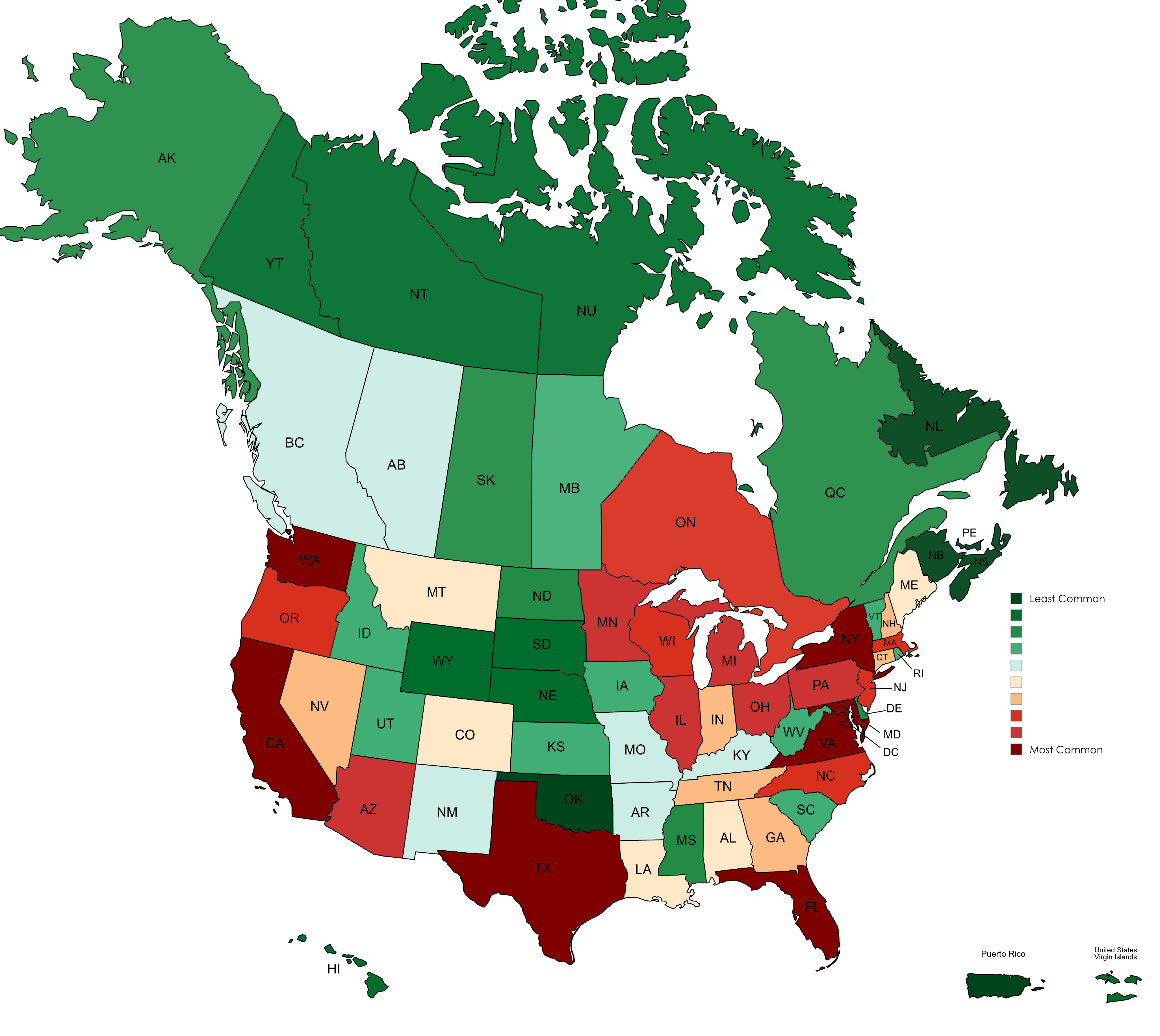
The darker green the section, the more rare it is. The Canadian provinces in the east and north entered my mind, however they would be cold climates to be setting up a temporary antenna installation.
Looking at the United States, there are a few sections that come up low in my personal rankings. These are typically within several hundred miles of Kansas, and Kansas itself, which would at least partially be due to ionospheric skip hopping over the top of our neighbors on the upper 10/15/20m bands.
But three ARRL Sections began to stand out to me: Hawaii, Puerto Rico, and the US Virgin Islands. I had a bad experience as a kid in Hawaii, which narrowed the field down and the USVI was the destination.
Planning the Station
Preparation was key. Drawing on my Parks on the Air (POTA) experiences, I chose the Yaesu FT-891 radio, capable of 100 watts, an LDG tuner, and the Rig Experts Shackmaster power supply. Not knowing what the terrain would offer, I designed a base-loaded vertical antenna that could handle 40m through 10m and fit easily inside a suitcase. Flexibility, reliability, and portability were essential.
I also knew that getting replacement parts on the island would be next to impossible for things like coax, connectors, and other specialty items, so I carried a backup of coax, power cord, and a spare End Fed Half Wave wire antenna.
Finding the right location was a mix of research and “luck”. I had to dig around a little bit, and I got a couple of “no’s”, but eventually a VRBO rental with ocean views and a supportive owner completed the planning.
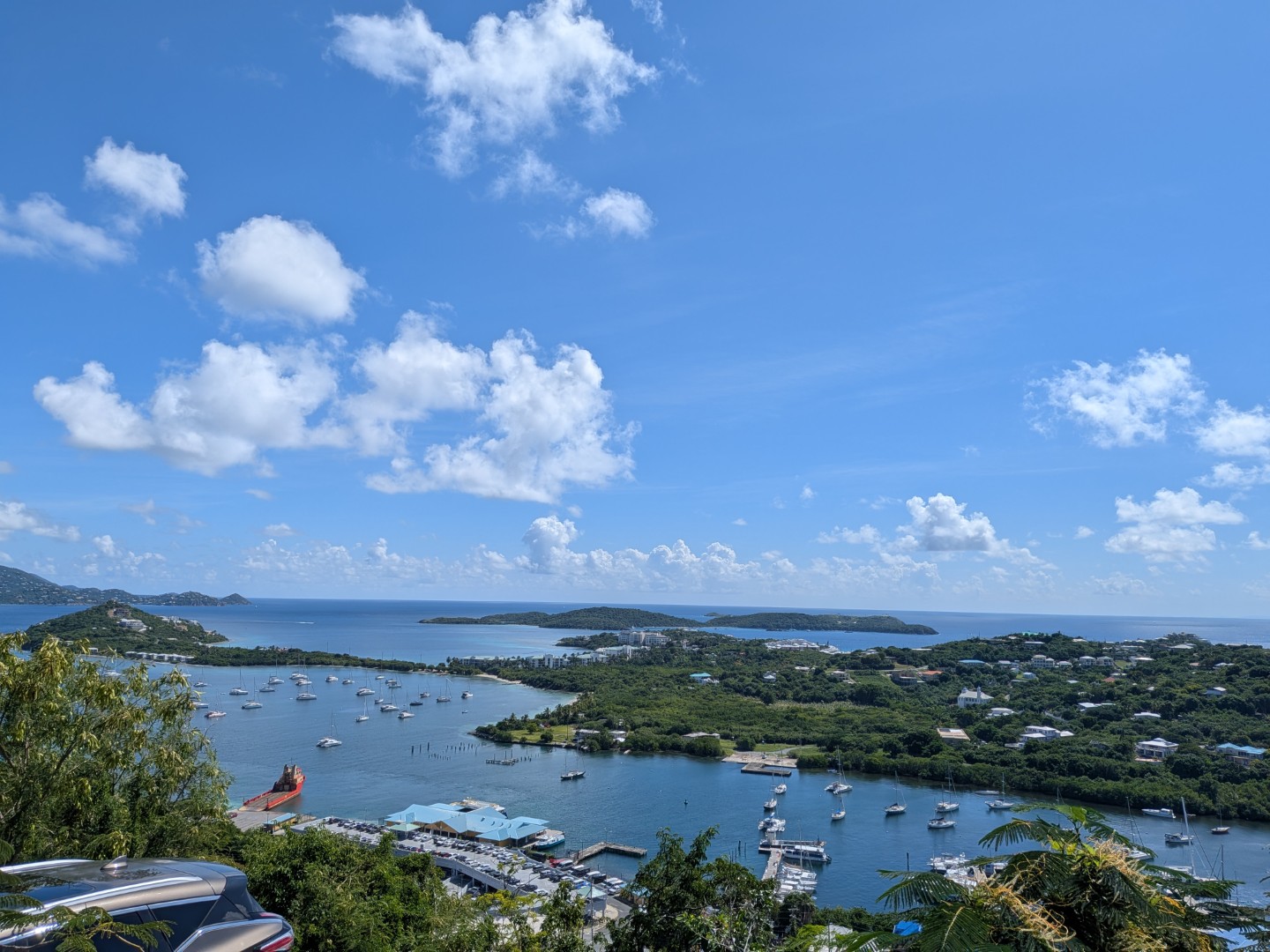
Journey to the Islands
The travel itself was a marathon—six hours of flights, two rounds through TSA, and the usual anxieties of carrying radio gear. I carried all the critical radio hardware in my carry-on, with the second set of spare cables and antenna in the checked baggage. Wichita’s TSA was a breeze, but Dallas required me to unpack all of the hardware from the carry on to be re-scanned. In the end, everything made it through without issues.
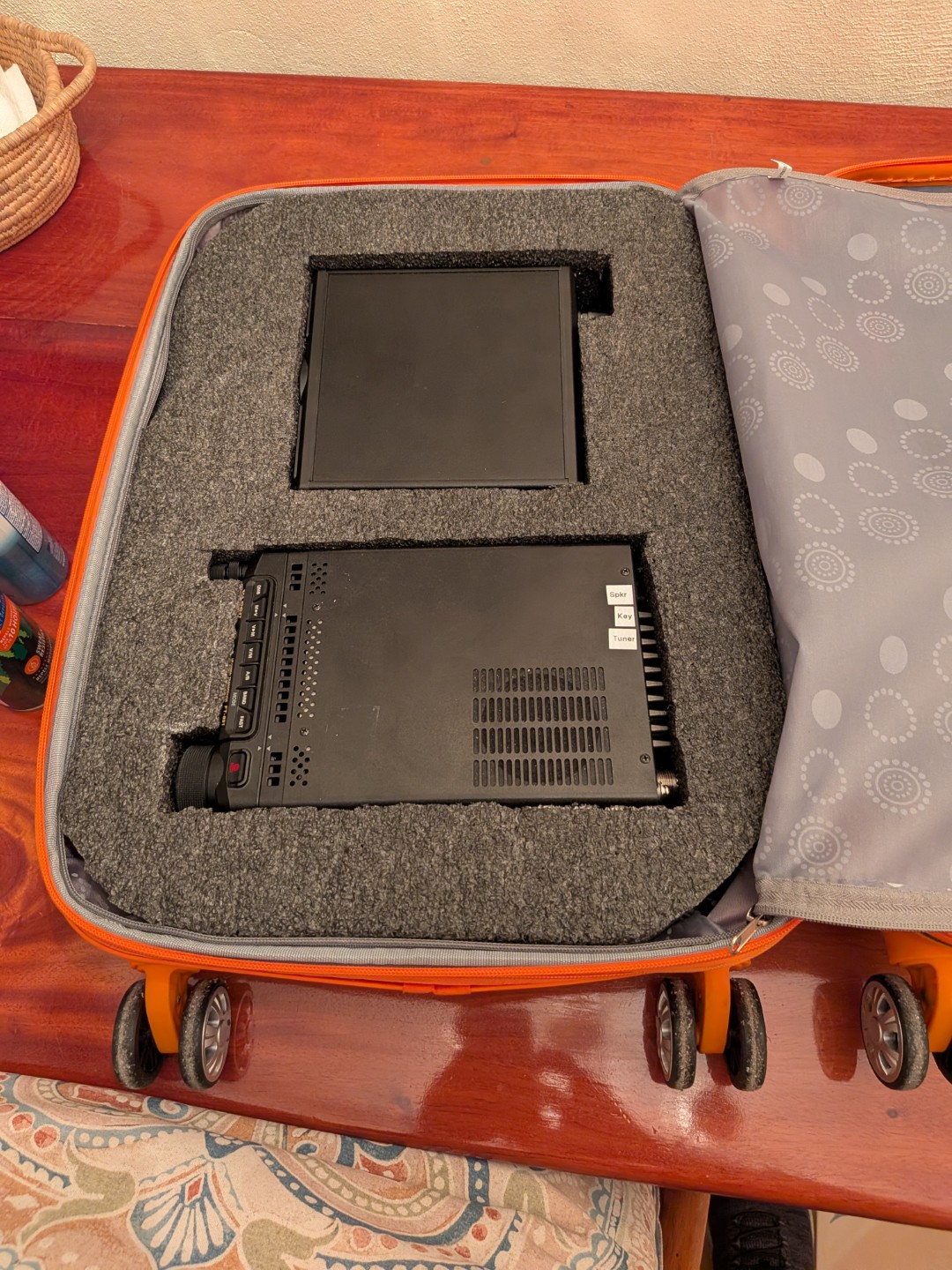
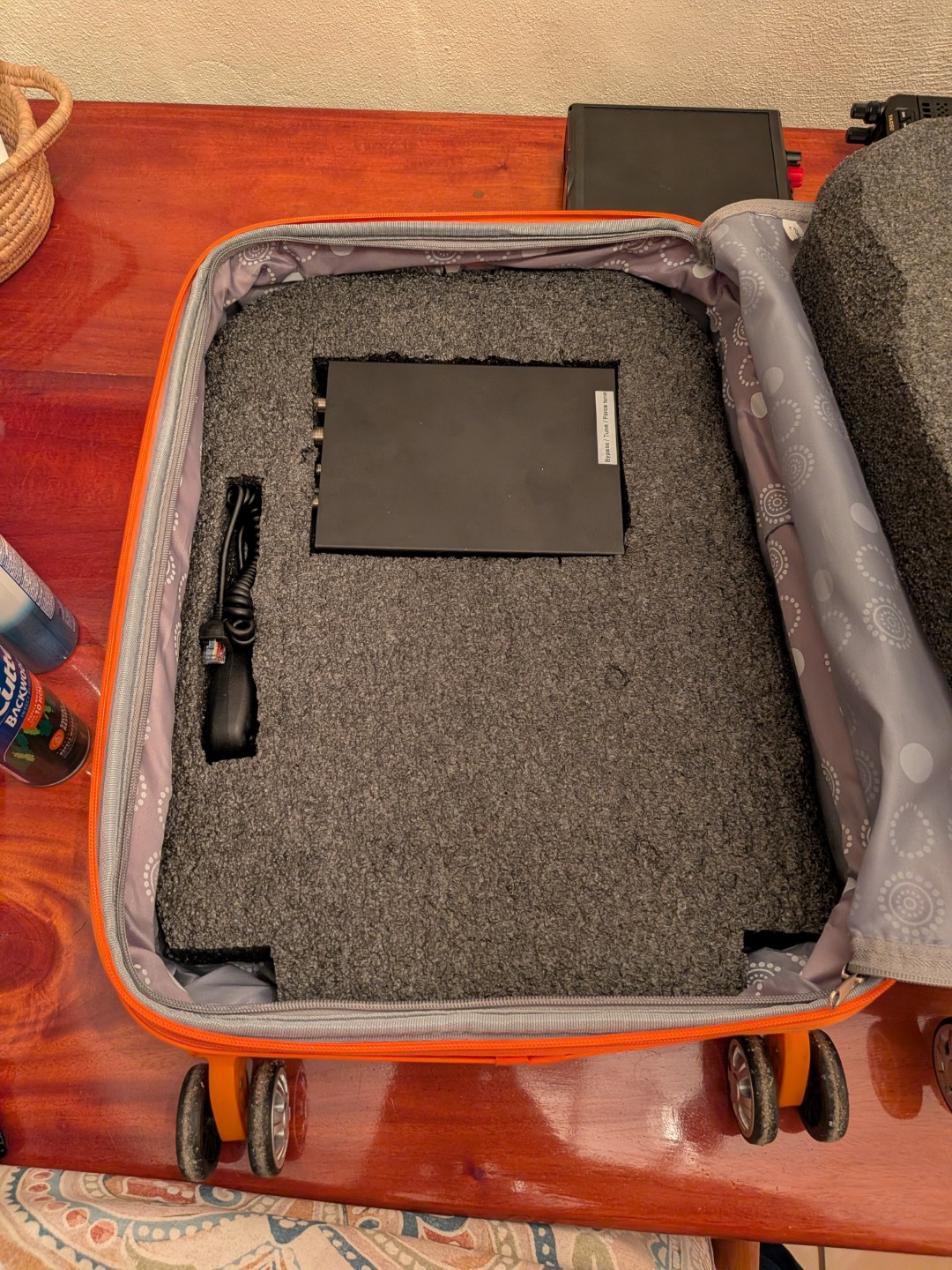
The radio, tuner, and power supply were all carefully packed away in a custom-cut foam enclosure that fit perfectly in one half of the roller carry on. The tuner was on bottom, followed by a second layer that held the radio and power supply.
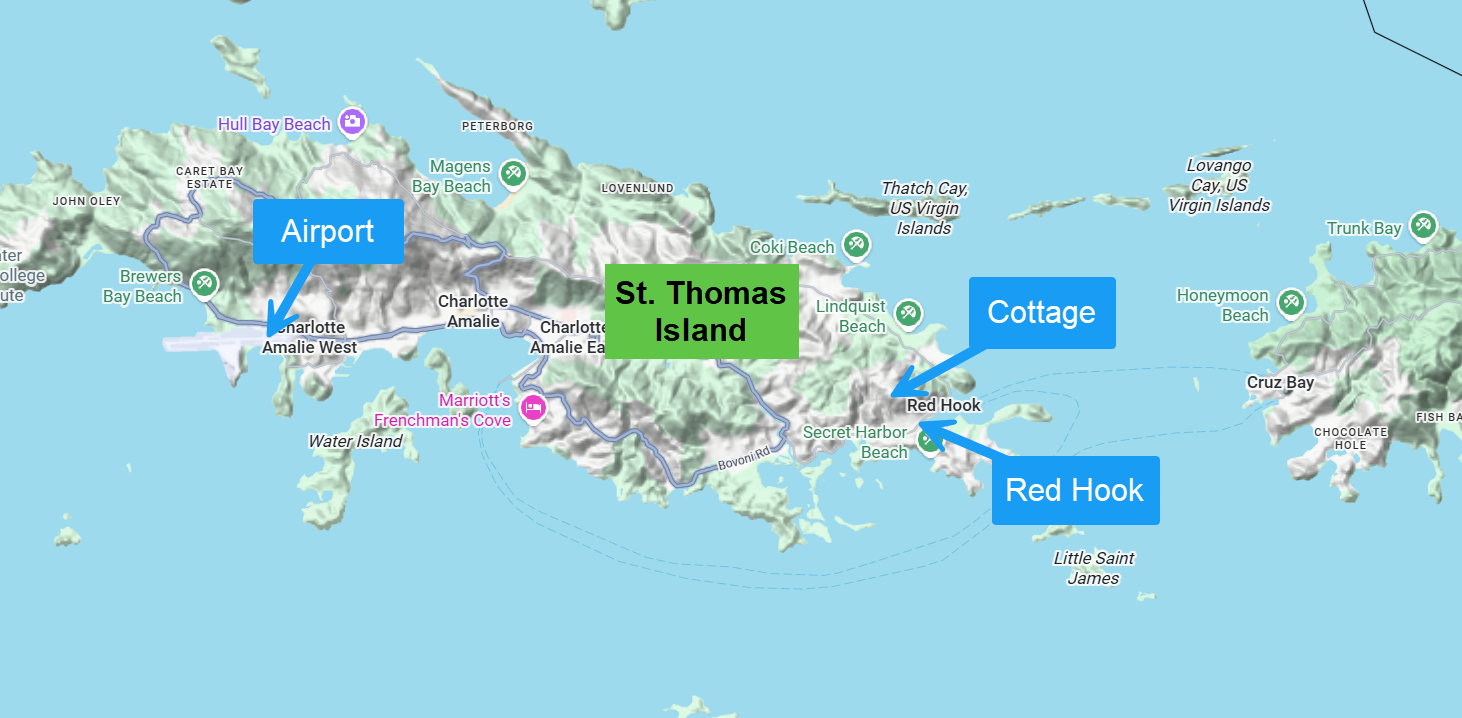
The November Sweepstakes starts on Saturday afternoon, so we planned our travel to arrive Friday afternoon. We picked up a rental car and made our way across the island on the southeast side to the town of Red Hook.
Getting on the Air
At the VRBO, I set out to get the antenna in the air, which was both easier and more complicated than expected. The cottage had a deck along one side of the building with an open roof space and the 17’ whip extended straight up through that area. Plastic zip-ties were used to lash the bottom portion of the antenna onto the wooden post.
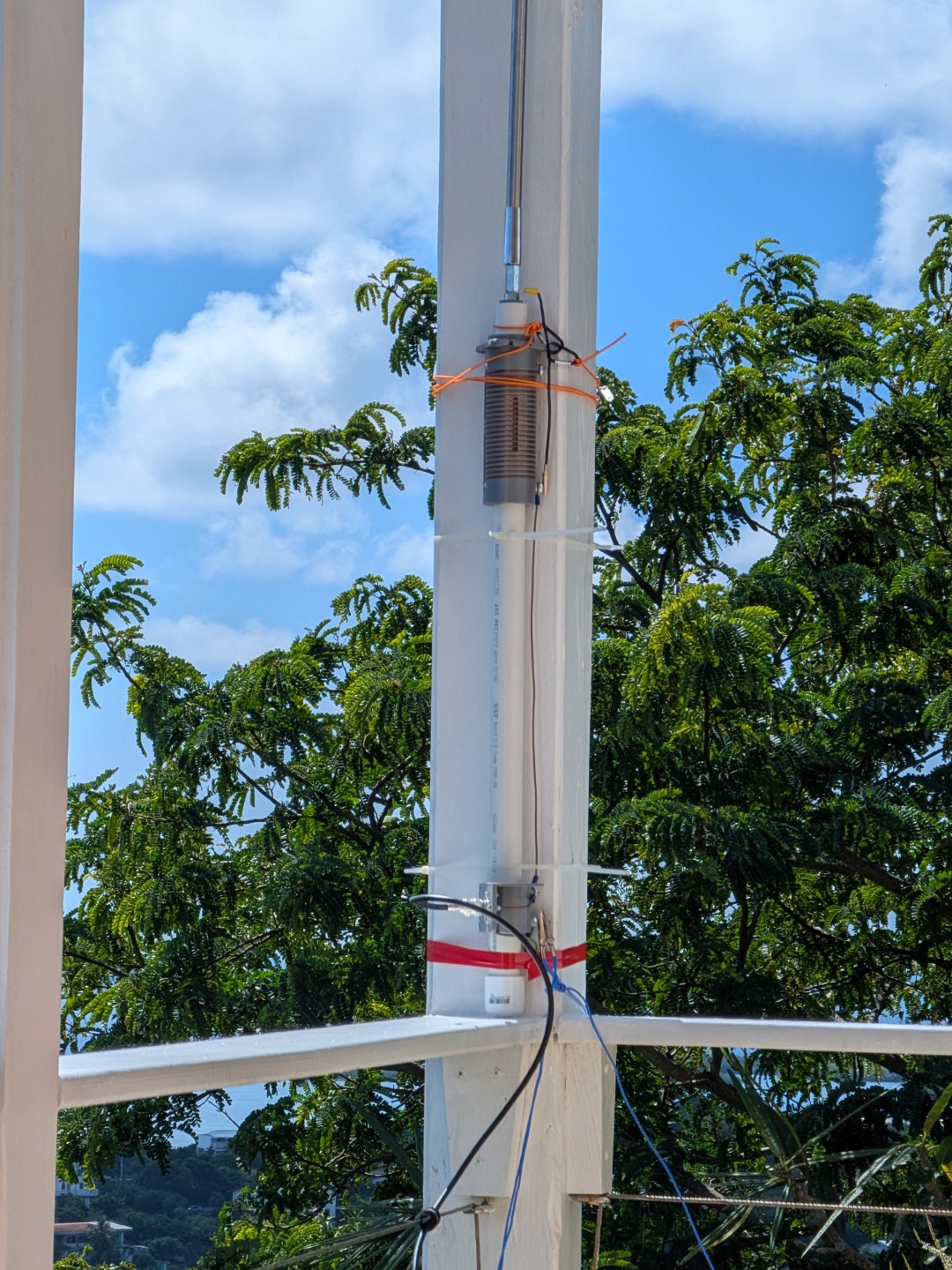
Stringing out the radials did get complicated though, as I didn’t expect such a steep terrain that I couldn’t even get to the bottom of. In the end, I laid out two radials along the two sides of the porch, and left a 3rd radial hanging straight down off the balcony into the brush below.
The cottage was small, and the door jams didn’t fit tightly, which conveniently allowed the RG-8X coax to slip under the door, along with the geckos.
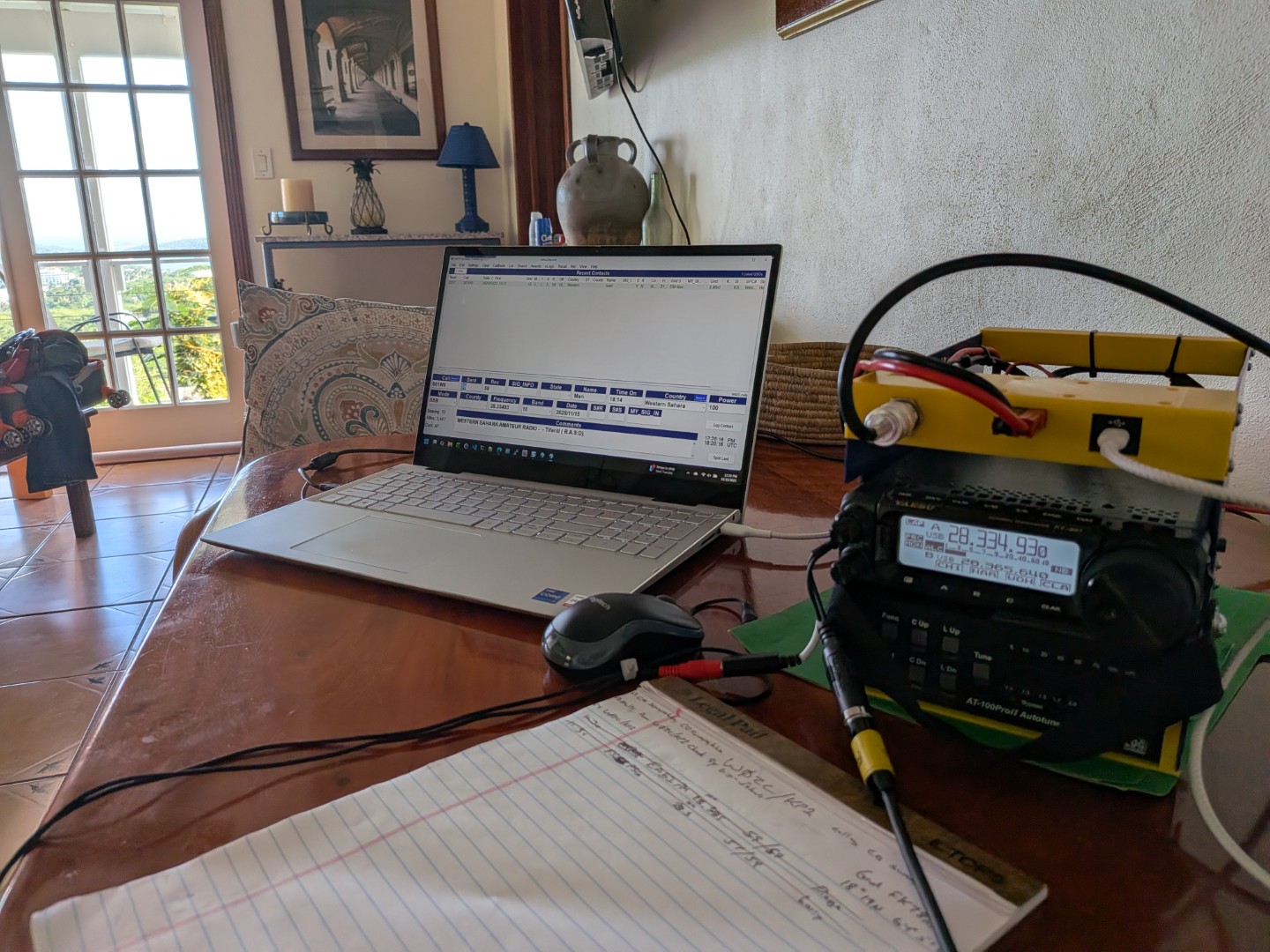
I re-assembled my go-pack for the FT-891 and had the vertical antenna tuning up right away. It was getting late by this time, and the bands were pretty quiet, so I shut it down and set out to relax a little before the contest started the next afternoon.
Contest Weekend
Saturday morning rolls around and the day that I’d been planning for nearly a decade was upon us. With the local time zone out in the Islands, the Sweepstakes didn’t start until late in the afternoon, so we took our time to enjoy the morning, go into town to pick up some lunch, and generally just relax.
I fired up the HF radio an hour or so before the contest started, and the bands were still very quiet. I’ve observed that before where the contesters all seem to be saving their voices for the upcoming event, so at first I didn’t think much of it.
Pretty soon 2100Z rolls around and I can faintly hear the contest start, but there’s nothing that moves my needle more than an S-unit or two above the noise floor, and there were massive gaps in the band, which usually would be filled by eager contesters trying to split the lanes and squeeze in.
Panic sets in…
I tune across 10m, 15m, and 20m. It’s all the same. An occasional station which barely moves the needle, and absolutely no chance of hearing the other station in the conversation.
I finally find a loud station – sure enough it’s another ham here in the Virgin Islands that is literally line-of-sight off the balcony on another island. I heard him around S9, but many of the stations calling him were weak or non-existent in my receiver. He was working about two stations a minute, and I couldn’t even break his pile-up.
Postmortem
I’d like to say that I figured out that my antenna wasn’t plugged in, or I had the radio in some unusual configuration. But sadly, no. We checked and double-checked everything. My wife helped me string up the backup wire antenna up as high as we could get under the circumstances, and it made no difference.
Sunday morning I woke up at a decent time and turned the radio on hoping for a miracle. There was no miracle, but I did collect some interesting data.
There were stations on the air that I could hear, but none of them were contesting. I worked seven contacts from Europe to South America and heard another loud station from Africa that was busy with his own pileup. Signals were loud, and we had nice QSOs.
But one stations stuck out. It was a Texas station that had been working some Europeans when I called him and he returned my call. We chatted for a bit as I explained my failure of a contest weekend.
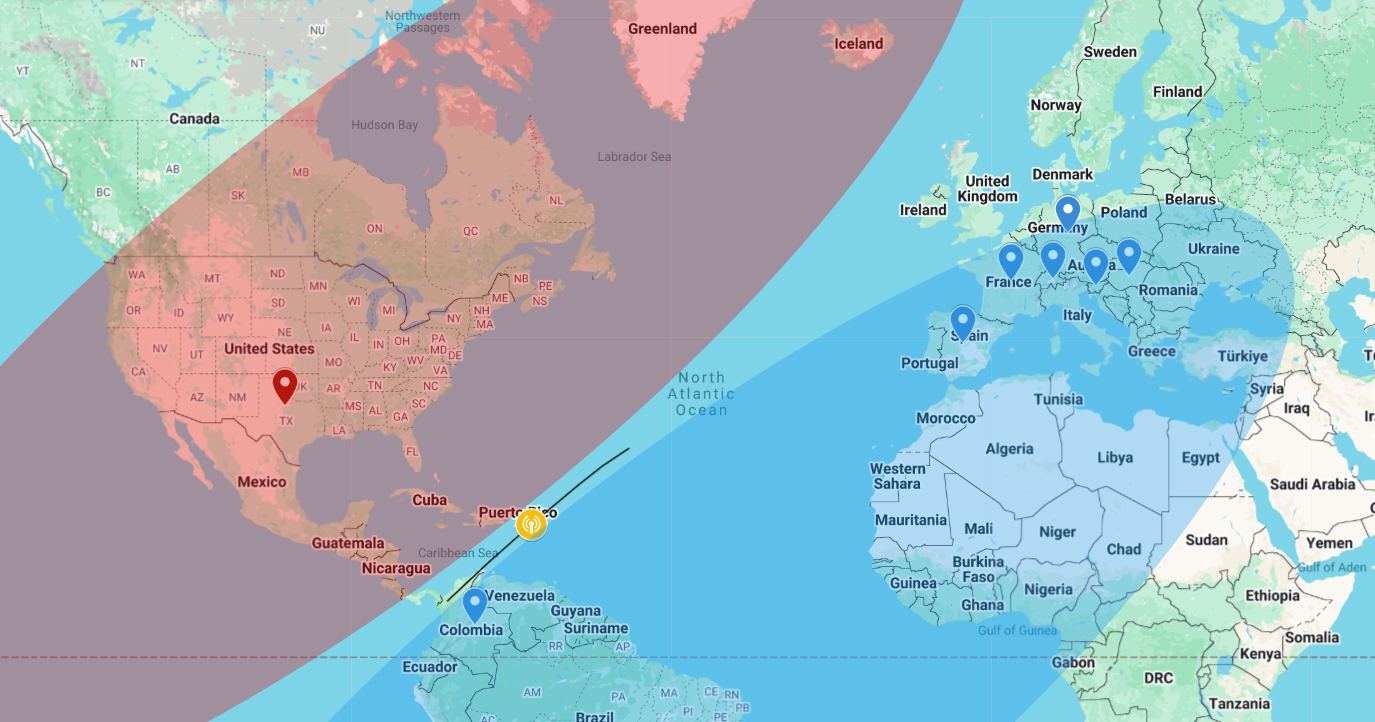
He was beaming Europe from Texas, which is a northeast beam heading. When I confirmed that I was in the Virgin Islands, he told me to stand by while he swung the beam around to the southeast, at which time the signal strength dropped significantly. He said that he was getting a stronger signal from me pointed towards Europe than southeast towards myself.
His signal had a noticeable flutter to it and a fair about of QSB, suggesting that it was likely long path passing across both poles to get to me from the south.
Putting the Pieces Together
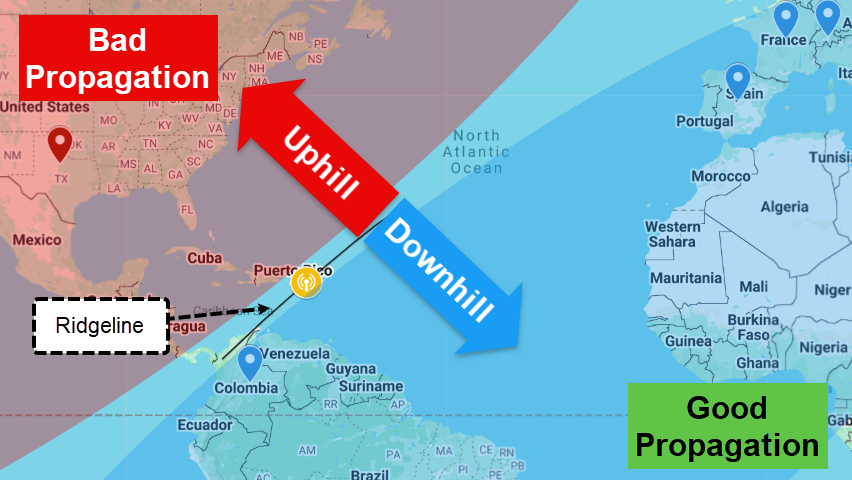
I stewed around the rest of the evening analyzing what went wrong, and what was up with the Texan with the flutter. I gradually came to realize that just because HF isn’t line-of-sight like we typically think of with VHF and above, the hill must be having a detrimental effect on my operations.
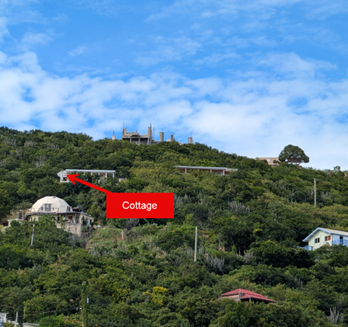
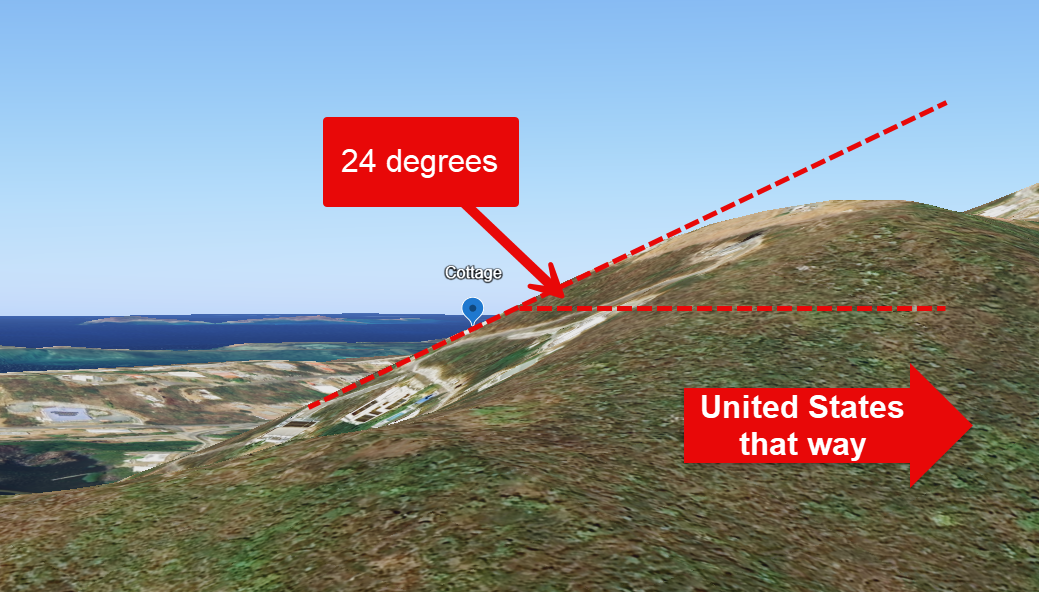
The cottage was located about 80m above the sea, and about halfway up a 150m ridge. As my “luck” would have it, I was on the southeast side of the ridge.
I struggled to get the free versions of EZNEC and others to model a sloped terrain, but I did find some Python scripting that would allow me to run a rudimentary antenna analysis. I modeled a simple vertical dipole which happened to be remarkably close considering how my radials hung over the side of the balcony.
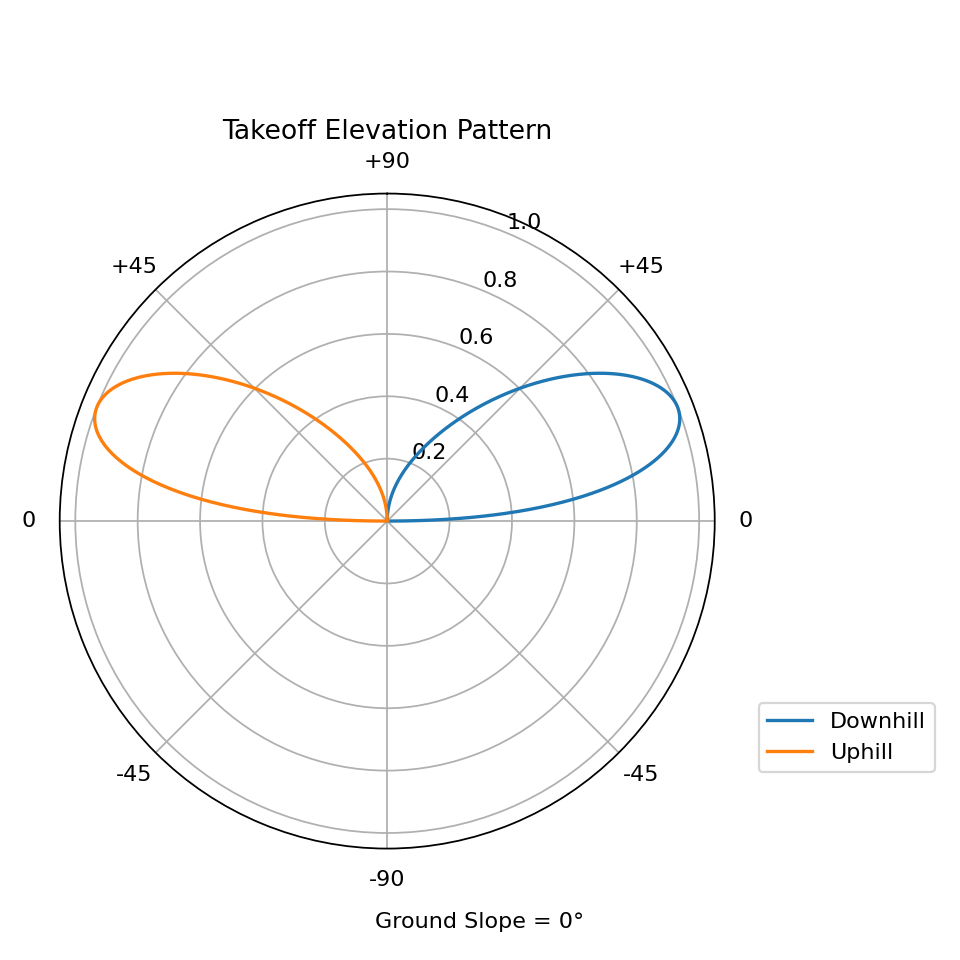
I started by modeling the antenna on flat (0 degrees) ground, which showed takeoff angles on the “uphill” and “downhill” sides as being equal, and roughly what you’d expected from that antenna.
Then I started tilting the ground steeper and steeper. At 12 degrees of ground slope, the downhill signal begins to flatten out, and the uphill signal is relatively attenuated.
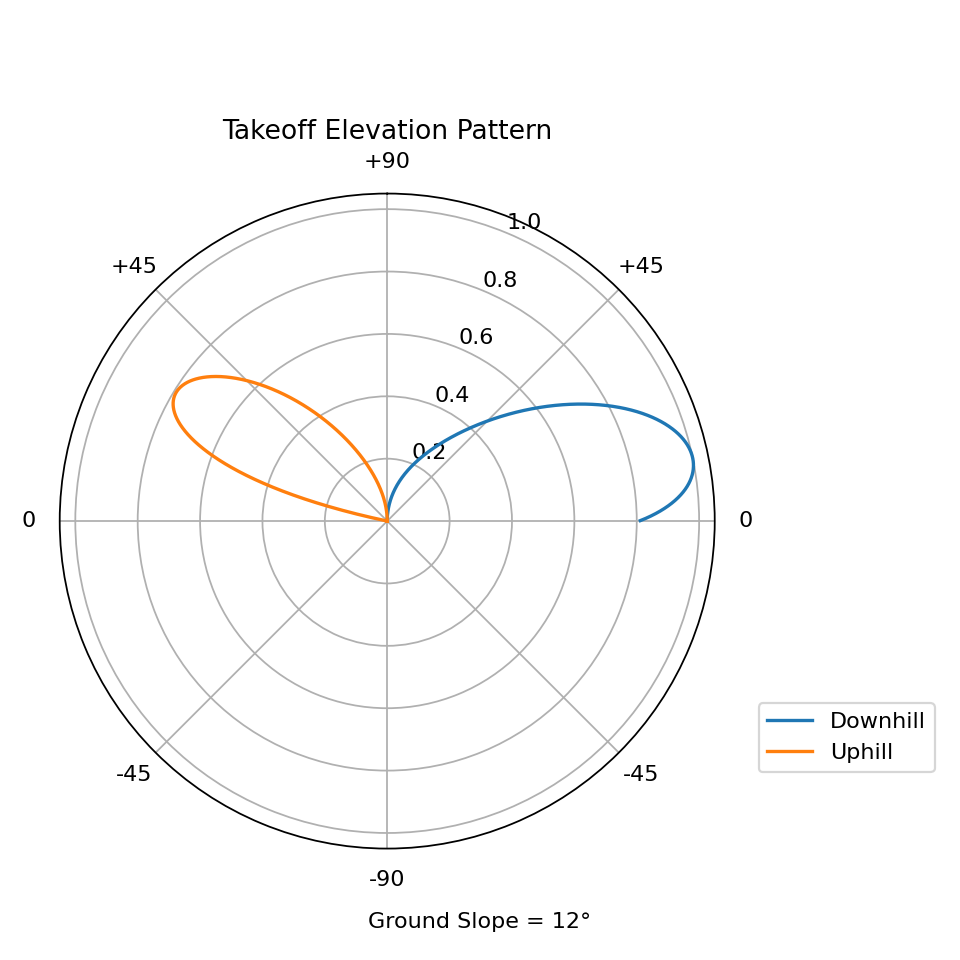
Of course our cottage wasn’t on a measly 12 degree slope, but instead it was over 24 degrees.
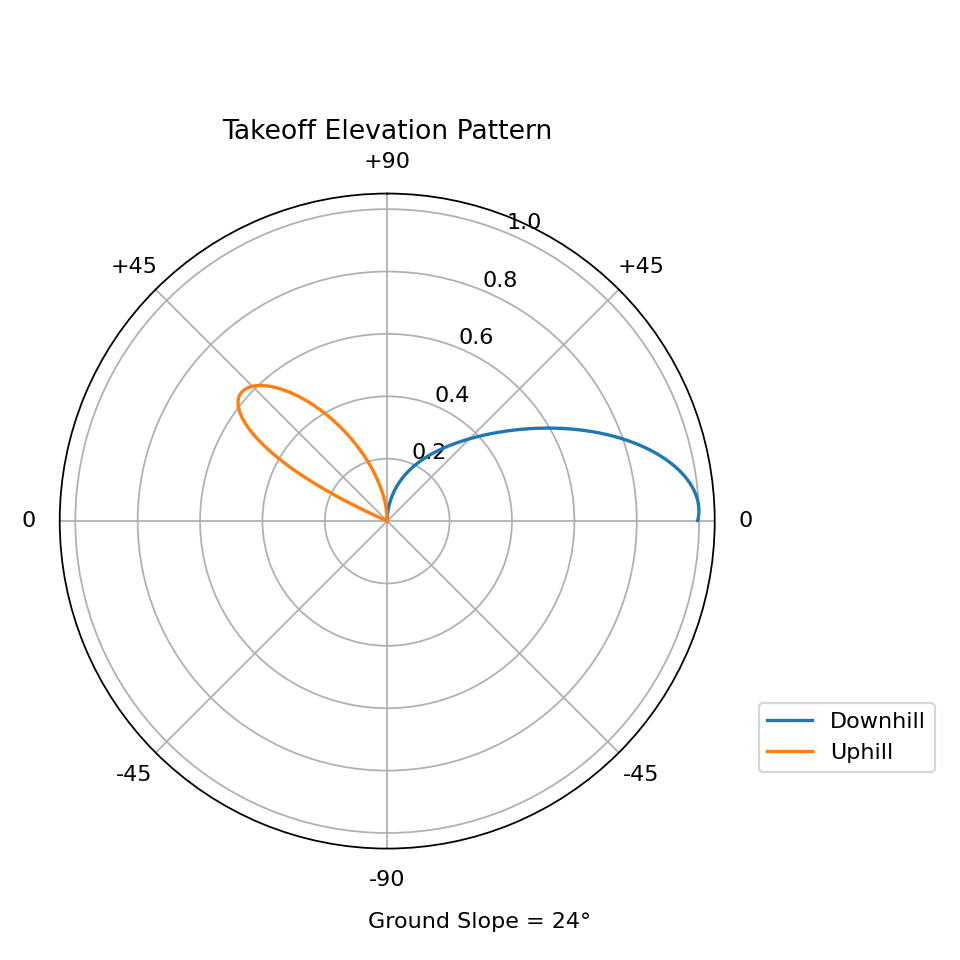
Reanalyzing for 24 degrees shows that not only is roughly half of my power being either absorbed or reflected, but the takeoff angle is pointed up 45 degrees into the sky, which is a killer for DX.
Testing the Theory
At this point, I had my theory. The unfortunate location of the cottage, halfway up the side of a mountain was obliterating my shot at operating the ARRL November Sweepstakes. But it was still nagging me that maybe something was wrong with the gear.
We also enjoy operating Parks on the Air (POTA) and after such a let-down of a contesting weekend I wanted to find a more optimal location and try working the US again. Fortunately, the island of St. John is essentially one massive national park.
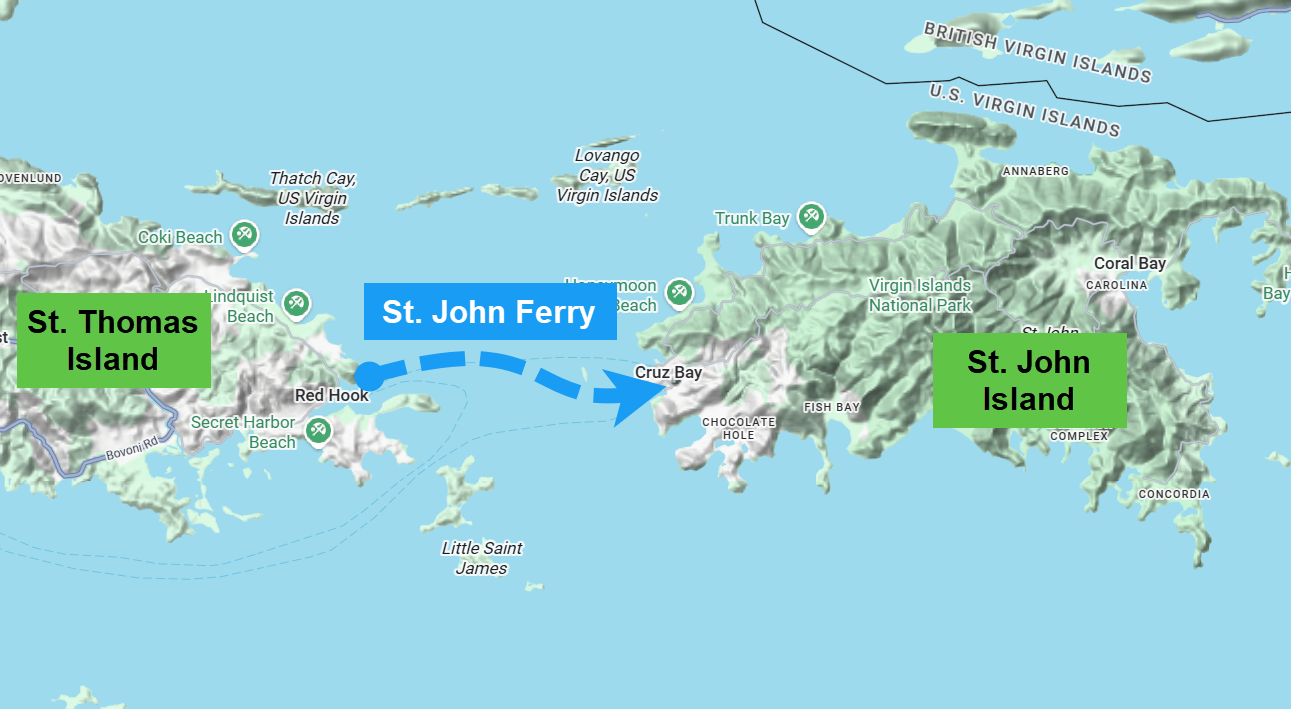
After a quick 20 minute ferry ride over in our rented car, we entered the Virgin Islands National Park, which is designated VI-0001. Soon we found a parking lot that gave good views to the northwest, and if my theories were correct, we wouldn’t have any problems working back across the Caribbean into the mainland.
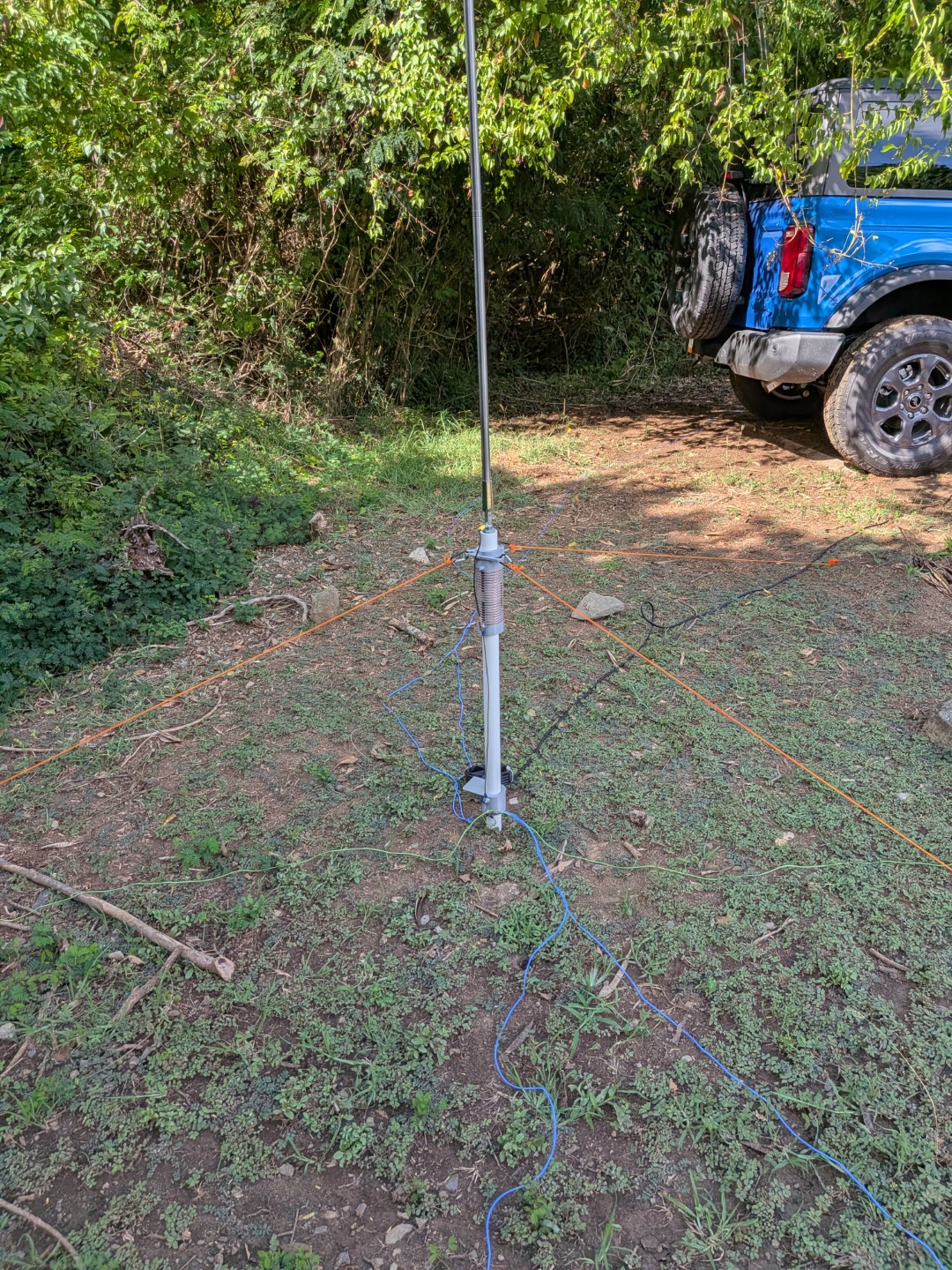
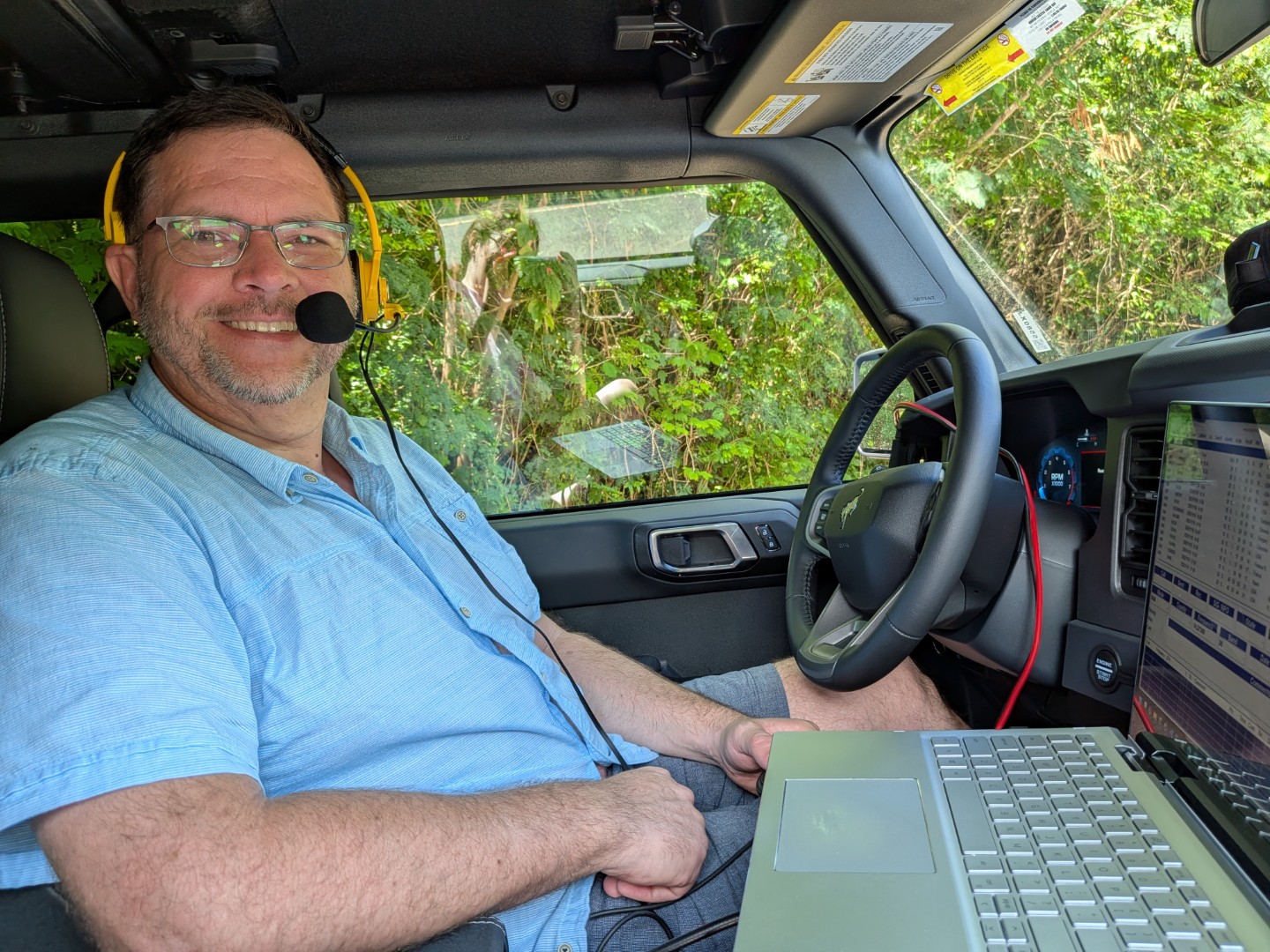
It was still a little early on 20m back in the states, but I got to calling CQ and within about 45 minutes I had the park activated with 11 QSOs, all of which were back to the Continental United States. As expected, the eastern third of the US was easiest and loudest.
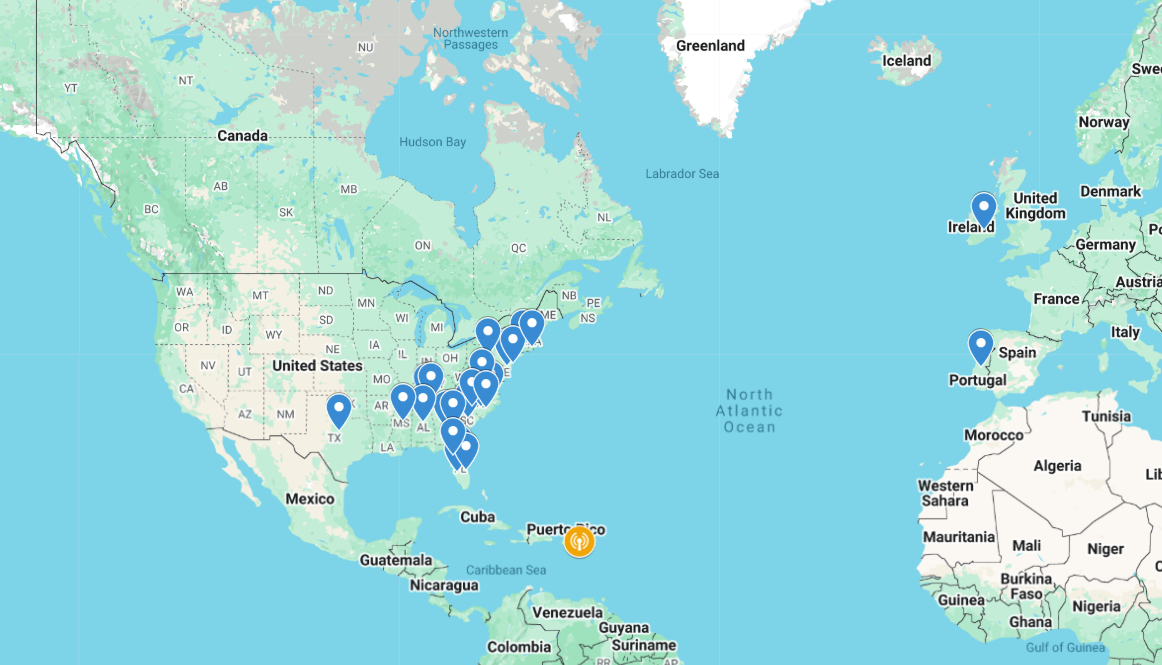
We went for a little stroll down to the beach to let the bands warm up a bit, and when we returned to the vehicle, the wife, W0MVC also activated the park. I’m not sure if it was just later in the day, or the YL-voice, but she managed to activate the park with 20 QSOs in 40 minutes.
Thus confirmed my theory that the equipment was all functional, and that as usual, it’s all about location, location, location.
Next Time
I literally scored zero in the 2025 November Sweepstakes SSB contest. While it was a massive letdown, it also yielded some great learning opportunities.
The Islands themselves were amazing to visit, and we plan on returning in the future, although probably with lower ham radio ambitions.
Resources
Related Articles
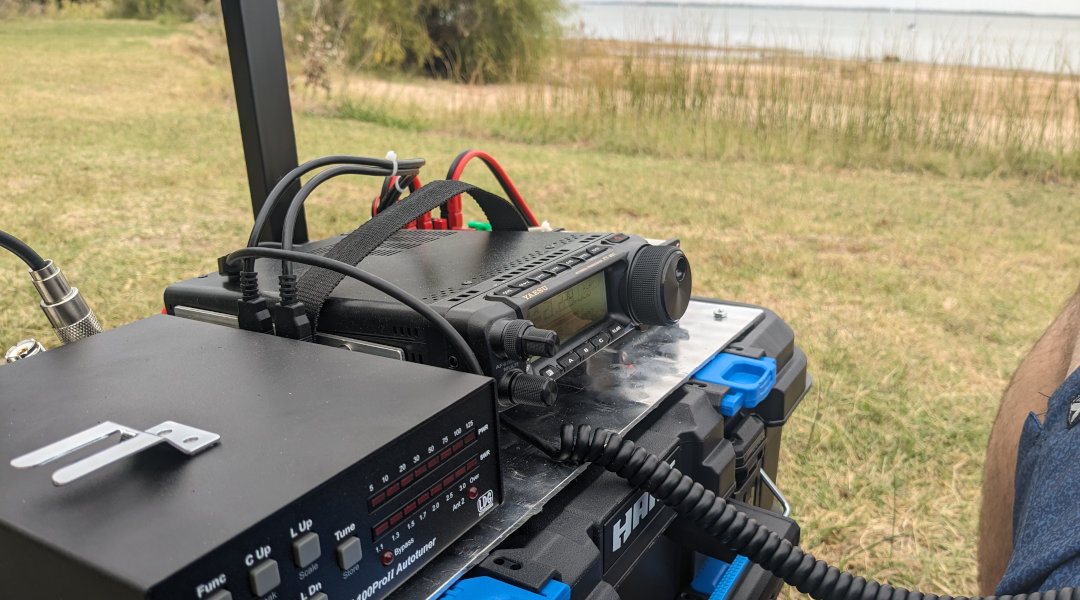
POTA Go Kit

W0ZC Contact Statistics
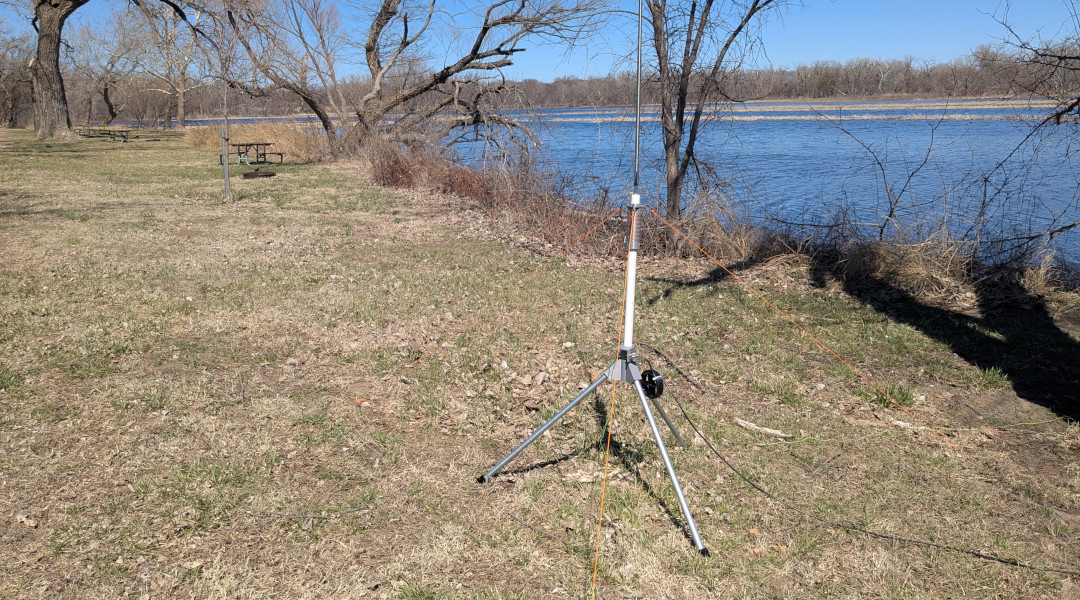
Portable 40m Vertical
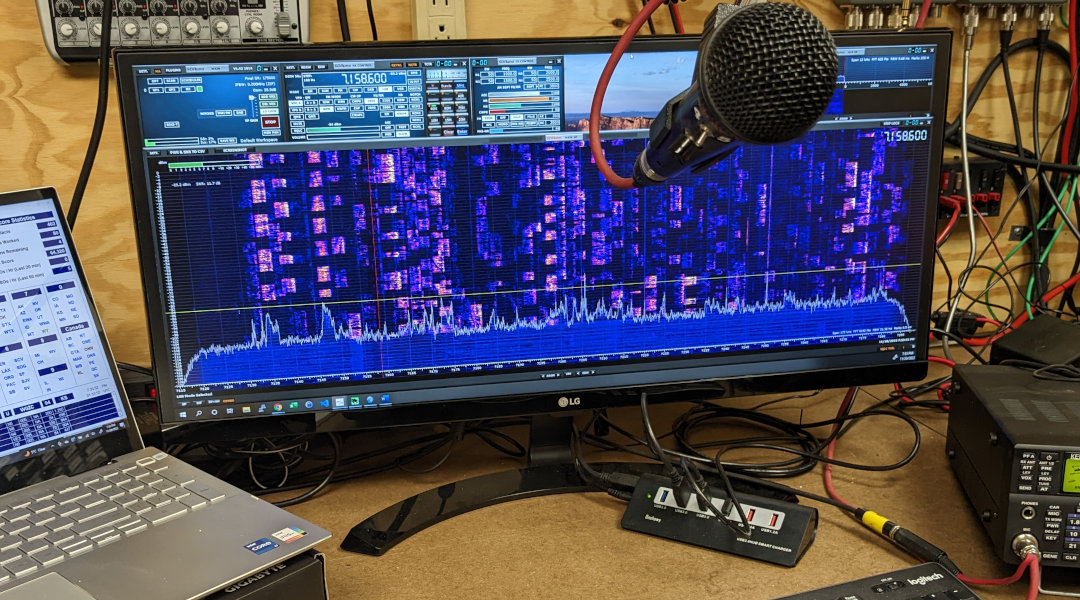
Pan Adapter for TS-590SG